
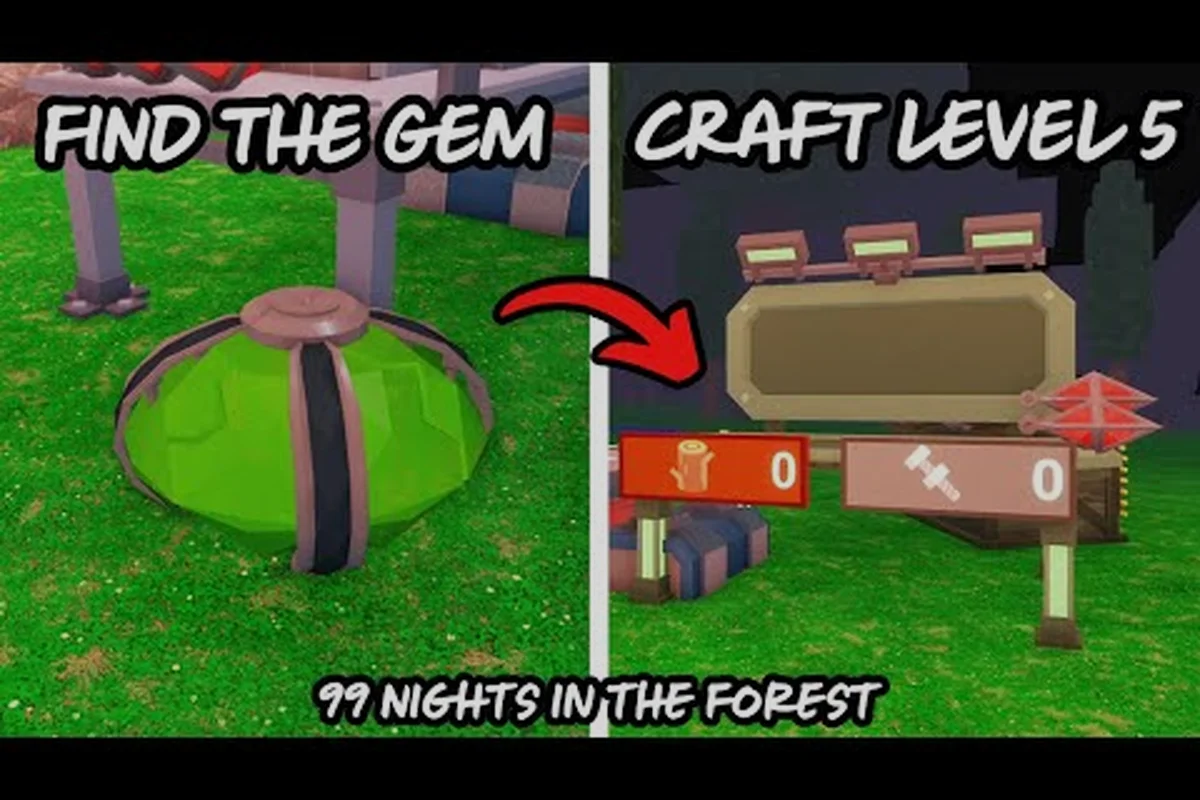
Unlocking the 99 Nights in the Forest tier 3 crafting bench changes how you approach every night after the early game, because it gates the most efficient healing, cooking, and defensive tools in the forest. Most players waste diamonds on classes before realizing that a fully upgraded bench provides more survival value than any single character purchase. This guide breaks down the exact unlock requirements, the hidden chainsaw recipe, and which advanced items deserve your first crafts.
According to PC Gamer’s guide, the tier 3 crafting bench requires specific forest materials and progression milestones that are best confirmed in their 99 Nights in the Forest tips breakdown.
Understanding the Tier 3 Crafting Bench Upgrade Path
The crafting bench in 99 Nights in the Forest follows a three-tier progression system that mirrors the game's overall difficulty curve. Your starting bench handles basic tools like the Stone Axe and Torch, while the tier 2 bench introduces mid-game essentials such as the Old Flashlight and Map Item. The tier 3 bench represents the endgame crafting station, unlocking recipes that directly counter the threats appearing after night 30.
Reaching the tier 3 bench requires more than just gathering wood and stone. The upgrade system ties into your camp's overall development, meaning you need to invest in multiple infrastructure pieces before the final bench tier becomes available. According to community testing, players who rush the tier 3 bench typically reach it between nights 25 and 35, depending on their resource efficiency and whether they play solo or in a group.
The upgrade itself consumes a significant amount of Refined Wood, Iron Ingots, and Diamond Shards, which forces you to prioritize between bench progression and other camp improvements. The 99 Nights in the Forest best base location guide explains how camp layout affects your resource gathering efficiency, which directly impacts how quickly you can afford the tier 3 upgrade.
| Bench Tier | Unlock Requirement | Key Recipes Unlocked | Recommended Night |
|---|---|---|---|
| Tier 1 | Default starting bench | Stone Axe, Torch, Basic Bandage | Night 1 |
| Tier 2 | 150 Wood, 50 Stone, 10 Iron | Old Flashlight, Map Item, Good Sack | Night 10-15 |
| Tier 3 | 300 Refined Wood, 80 Iron Ingots, 25 Diamond Shards | Crock Pot, Lightning Rod, Advanced Bandage, Chainsaw | Night 25-35 |
The resource investment feels steep at first, but the tier 3 bench pays for itself through the Crock Pot alone. This cooking station converts raw ingredients into meals that restore significantly more health than eating components individually, which becomes essential when night threats start dealing heavier damage.
The Crock Pot and Advanced Cooking Mechanics
The 99 Nights in the Forest crock pot is arguably the most impactful recipe unlocked at the tier 3 bench, because it transforms how you manage hunger and healing during extended survival runs. Before the crock pot, players rely on raw berries, cooked meat, and basic food items that provide modest restoration. The crock pot combines up to four ingredients into meals with multiplied healing values and bonus effects that raw food never offers.
Understanding crock pot recipes requires experimentation, but the community has documented several reliable combinations. A Meat Stew made from two raw meat, one mushroom, and one berry restores 45 health and 60 hunger, while a Forest Salad using three berries and one herb provides 30 health plus a temporary movement speed boost. These meal effects stack with class passives, making the crock pot especially valuable for support-oriented characters like the Chef class.
The crock pot also introduces the concept of food spoilage, which adds a time management layer to your cooking strategy. Meals left in the crock pot for more than two in-game days begin losing effectiveness, so you need to plan cooking sessions around your exploration schedule. Players who master crock pot timing report surviving nights 40 through 60 with significantly fewer healing item expenditures.
| Crock Pot Recipe | Ingredients | Health Restored | Hunger Restored | Bonus Effect |
|---|---|---|---|---|
| Meat Stew | 2 Raw Meat, 1 Mushroom, 1 Berry | 45 | 60 | None |
| Forest Salad | 3 Berries, 1 Herb | 30 | 25 | +10% movement speed for 60s |
| Hearty Soup | 1 Raw Meat, 2 Mushrooms, 1 Herb | 55 | 40 | +15 max health for 120s |
| Energy Brew | 2 Herbs, 2 Berries | 20 | 15 | Stamina regeneration doubled for 90s |
The Hearty Soup recipe stands out as the best general-purpose meal because its temporary max health increase effectively functions as damage mitigation. When you combine the soup's +15 max health with the Advanced Bandage healing over time, you create a survivability loop that lets you tank hits from the Deer and other night threats without retreating. The farm guide covers efficient ingredient farming routes that keep your crock pot supplied through the late game.
The Lightning Rod and Base Defense Integration
The 99 Nights in the Forest lightning rod represents the tier 3 bench's most important defensive upgrade, because it protects your entire camp from storm events that become increasingly frequent after night 20. Without a lightning rod, a single storm can destroy multiple camp structures, setting your progression back by several nights of resource gathering. The lightning rod redirects strikes into a harmless ground discharge, preserving your benches, walls, and storage containers.
Installing the lightning rod requires strategic placement near your camp's center, because its protection radius covers a fixed area rather than the entire map. Community testing indicates the rod protects structures within a 15-tile radius, which means large camps may need two rods for full coverage. The rod itself consumes Copper Wire and Iron Ingots during construction, materials that also compete with other tier 3 recipes.
Storm intensity scales with your current night count, and the lightning rod's durability reflects this progression. A single rod survives approximately 8 to 10 storm events before requiring repairs, which cost 5 Iron Ingots and 2 Copper Wire per maintenance cycle. Players who neglect rod repairs often lose their crock pot or crafting bench mid-storm, forcing expensive rebuilds.
| Storm Night | Lightning Frequency | Rod Durability Loss | Structures at Risk Without Rod |
|---|---|---|---|
| Night 20-29 | Every 3-4 minutes | 8% per strike | Benches, storage |
| Night 30-49 | Every 2-3 minutes | 12% per strike | All camp structures |
| Night 50+ | Every 1-2 minutes | 15% per strike | Entire camp including walls |
The lightning rod also creates interesting synergy with the Sundial item, because both tools manage environmental threats that punish unprepared camps. While the sundial tracks time and helps you plan daylight activities, the lightning rod handles the storm threat that arrives regardless of your time management. Together, they form the backbone of a defensible late-game camp.
Crafting the Advanced Bandage and Healing Items
Learning how to craft the 99 Nights in the Forest bandage at the tier 3 bench marks a significant healing upgrade over the basic version available from the start. The Basic Bandage restores 20 health instantly but has a 30-second cooldown, while the Advanced Bandage heals 40 health over 10 seconds with a shorter 20-second cooldown. This difference becomes critical during extended fights against the Cultist Invasion or when multiple night threats attack simultaneously.
The advanced bandage recipe requires Cloth Scraps, Herbs, and Purified Water, all of which become easier to farm once you have the tier 3 bench's other recipes online. The crock pot produces meals that supplement bandage healing, while the lightning rod protects the camp structures where you store your healing supplies. This interconnected progression loop is why the tier 3 bench feels like a complete power spike rather than a single item unlock.
Healing item management changes fundamentally once advanced bandages become available. Instead of hoarding basic bandages for emergencies, you can use advanced bandages proactively during exploration, knowing that the healing over time effect continues working while you reposition or dodge. Players report that this proactive healing approach reduces overall resource consumption by roughly 30% compared to reactive basic bandage usage.
| Healing Item | Crafting Bench | Health Restored | Cooldown | Crafting Cost |
|---|---|---|---|---|
| Basic Bandage | Tier 1 | 20 instant | 30 seconds | 3 Cloth Scraps |
| Advanced Bandage | Tier 3 | 40 over 10s | 20 seconds | 3 Cloth Scraps, 2 Herbs, 1 Purified Water |
| Herbal Remedy | Tier 3 | 60 over 15s | 45 seconds | 4 Herbs, 2 Purified Water |
The Herbal Remedy offers the highest healing potential but demands rare ingredients that compete with crock pot recipes. Most players reserve herbal remedies for boss encounters or the final nights before day 99, while relying on advanced bandages for routine healing. This tiered approach to healing items mirrors the game's overall resource management philosophy.
The Secret Chainsaw Recipe and Location Requirements
The 99 Nights in the Forest secret chainsaw is the tier 3 bench's most coveted recipe, because it revolutionizes wood gathering and unlocks the Mystery Badge achievement. Unlike other tier 3 recipes that appear automatically when you upgrade the bench, the chainsaw requires discovering a hidden blueprint located in a specific forest zone. The secret chainsaw location guide details the exact route to this blueprint spawn.
Once you obtain the blueprint, crafting the chainsaw at the tier 3 bench requires 15 Iron Ingots, 5 Diamond Shards, and 1 Chainsaw Motor, a rare component found only in the Volcanic Biome or dropped by elite monsters. The chainsaw's primary function is instant tree harvesting, reducing the time to gather 100 wood from roughly 3 minutes with a stone axe to under 30 seconds. This efficiency transforms your resource economy, especially when combined with the Good Sack for expanded inventory.
The chainsaw also functions as a weapon, dealing 35 damage per hit with a fast attack speed that makes it competitive against mid-tier melee options. However, the chainsaw consumes Fuel with each use, whether harvesting or fighting, which means you need a steady fuel supply to maintain its benefits. Players who rush the chainsaw without establishing fuel infrastructure often find themselves with a powerful but unusable tool.
| Tool | Wood per Minute | Fuel Consumption | Combat Damage | Special Ability |
|---|---|---|---|---|
| Stone Axe | 35 | None | 10 | None |
| Iron Axe | 60 | None | 18 | None |
| Chainsaw | 200+ | 1 Fuel per 10 uses | 35 | Instant tree harvest |
The chainsaw's fuel requirement creates an interesting strategic choice: do you invest in fuel production infrastructure, or do you stick with the Iron Axe's slower but free wood gathering? Most experienced players recommend building at least one Fuel Refinery before committing to chainsaw usage, because the efficiency gains only materialize when you can sustain the fuel cost.
Synergizing the Taming Flute with Tier 3 Bench Recipes
The 99 Nights in the Forest taming flute connects to the tier 3 bench through its upgrade path, because the flute's higher tiers require materials that only become efficiently farmable with tier 3 tools. The base taming flute allows you to befriend small animals like Rabbits and Foxes, but the upgraded flute versions unlock larger companions including Wolves and Bears. These advanced companions provide combat support and resource gathering bonuses that complement the tier 3 bench's output.
The flute upgrade system consumes Animal Essence, a resource dropped by tamed creatures, along with Diamond Shards and Refined Wood. The chainsaw dramatically speeds up the wood gathering portion of this requirement, while the crock pot's meals keep your health high during the dangerous hunts for animal essence. This synergy means players who unlock the tier 3 bench first can upgrade their taming flute significantly faster than those who prioritize flute progression early.
The taming guide provides detailed information on which animals offer the best return on your taming investment. When you combine a fully upgraded taming flute with tier 3 bench tools, your camp becomes nearly self-sustaining, because tamed animals gather resources while you focus on exploration and combat. This late-game efficiency loop is the ultimate payoff for investing in the tier 3 crafting bench.
| Flute Tier | Animals Tameable | Upgrade Cost | Companion Benefits |
|---|---|---|---|
| Tier 1 | Rabbits, Foxes | Base item | Minor resource gathering |
| Tier 2 | Deer, Boars | 10 Animal Essence, 5 Diamond Shards | Combat support, faster gathering |
| Tier 3 | Wolves, Bears | 25 Animal Essence, 10 Diamond Shards, 20 Refined Wood | Strong combat, rare resource detection |
The tier 3 taming flute's ability to command Bears provides the strongest combat companion in the game, capable of tanking hits from the Ram and other volcanic biome threats. This companion effectively functions as a second player during solo runs, which is why the flute upgrade path is considered essential for solo players attempting nights 60 through 99.
Frequently Asked Questions
How much does the tier 3 crafting bench cost in total?
The tier 3 bench requires 300 Refined Wood, 80 Iron Ingots, and 25 Diamond Shards for the final upgrade, plus the cumulative costs of reaching tier 2 first. Most players spend 15 to 20 nights gathering these materials, though group play can reduce this timeline significantly through resource sharing.
Where do I find the secret chainsaw blueprint?
The chainsaw blueprint spawns in a hidden location within the Volcanic Biome, typically guarded by elite monsters. You need the tier 3 bench unlocked before the blueprint appears, and the exact spawn point rotates between several predetermined locations each in-game week.
Can I craft the crock pot before upgrading to tier 3?
No, the crock pot recipe only appears at the tier 3 bench. Some players mistake the Campfire for a cooking station, but the campfire only cooks raw meat and basic items. The crock pot's advanced recipes and bonus effects require the full tier 3 upgrade.
Is the lightning rod worth the resource investment?
Yes, especially after night 30 when storm frequency increases dramatically. The lightning rod prevents catastrophic camp damage that would otherwise cost more resources to repair than the rod's construction cost. Players who skip the rod often lose entire storage containers during late-game storms.
How does the chainsaw compare to the taming flute for progression priority?
The chainsaw accelerates resource gathering, while the taming flute provides combat support through animal companions. Most players benefit from unlocking the chainsaw first because faster wood gathering speeds up every other progression path, including the flute's upgrade requirements.