
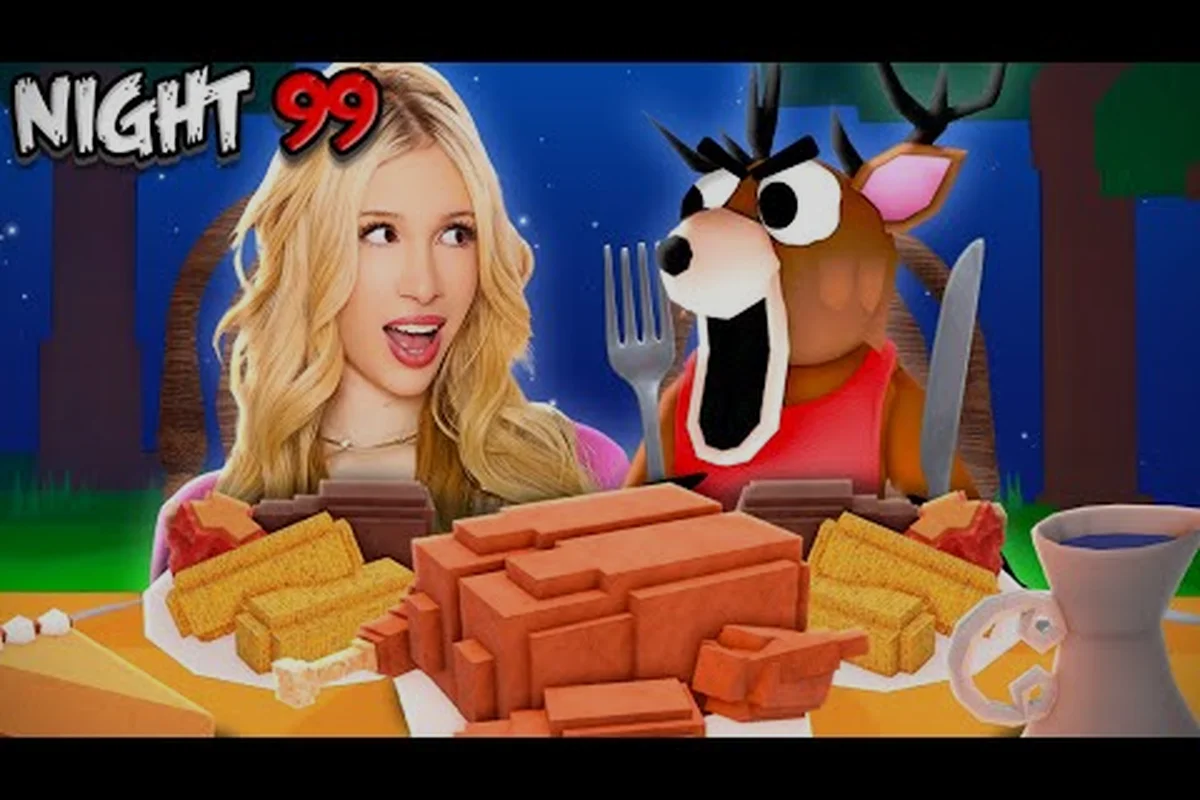
Mastering 99 Nights in the Forest cooking food at the campfire changes how long your squad survives after dark, because every meal you prepare converts raw ingredients into health restoration, stamina recovery, and temporary stat boosts that raw food simply cannot match. While new players often burn through their entire inventory of berries and raw meat in the first few nights, experienced survivors treat the campfire as a production station that multiplies the value of every ingredient they gather. This guide breaks down the exact recipes, fuel requirements, and ingredient priorities that separate a starving run from a well-fed squad that pushes past night 50.
Understanding the Campfire Cooking Interface and Core Mechanics
The campfire cooking system in 99 Nights in the Forest operates on a simple but unforgiving rule set: you need a lit fire, a compatible ingredient, and enough fuel to complete the cooking cycle. When you approach a lit campfire with raw food in your inventory, the interaction prompt opens a cooking menu that displays available recipes based on what you are holding. The fire must stay lit for the entire cooking duration, which means any interruption from rain, entity attacks, or fuel exhaustion wastes the ingredient and forces you to restart.
Community testing consistently shows that the cooking timer scales with recipe complexity rather than ingredient count. A single piece of raw meat cooks in roughly 8 seconds, while multi-ingredient meals like stews or roasted platters can take up to 25 seconds of uninterrupted fire time. This timer mechanic creates a natural tension during night cycles, because you must balance cooking windows against the need to defend the campfire from approaching threats.
The interface also tracks a hidden burn risk value for each ingredient type. Delicate foods like berries and herbs have a narrow cooking window, while dense meats and root vegetables tolerate longer exposure. Players who leave food on the fire past the completion point report that the item degrades into a burnt scrap with no nutritional value, which means timing your removal matters as much as timing your placement.
| Ingredient Type | Base Cook Time | Burn Window | Output Quality |
|---|---|---|---|
| Raw Meat | 8 seconds | 4 seconds | High protein, restores 35 HP |
| Berries | 5 seconds | 2 seconds | Low nutrition, restores 12 HP |
| Root Vegetables | 10 seconds | 6 seconds | Medium carbs, restores 22 HP |
| Fish | 9 seconds | 3 seconds | High omega, restores 30 HP |
| Herbs | 4 seconds | 1 second | Status cleanse, restores 8 HP |
The burn window represents how many seconds after the cook completes before the item degrades. This data comes from aggregated player reports and may shift slightly with patches, but the relative ordering has remained stable across recent updates. Understanding these windows lets you prioritize which foods to cook first when the fire is under threat.
Best Recipes and Ingredient Combinations for Survival
The most efficient 99 Nights in the Forest cooking food at the campfire strategy revolves around combining ingredients that share similar cook times, because mismatched items force you to either undercook one component or burn another. Experienced players recommend building your inventory around recipe kits — pre-planned bundles of ingredients that cook together cleanly and produce a meal with stacked benefits.
The Meat and Herb Skewer stands out as the best early-game recipe because it pairs raw meat with any herb to create a meal that restores 42 HP while also cleansing one negative status effect. The cook time sits at 12 seconds, which fits comfortably into the gaps between night-time entity attacks. For squads running multiple classes, the Root Vegetable Stew provides area-based healing when consumed near allies, making it the preferred choice for coordinated base defense.
| Recipe | Ingredients | Cook Time | Primary Effect | Secondary Effect |
|---|---|---|---|---|
| Meat and Herb Skewer | Raw Meat + Any Herb | 12 seconds | Restores 42 HP | Cleanses 1 debuff |
| Root Vegetable Stew | 2 Root Vegetables + Water | 18 seconds | Restores 55 HP | Area heal for allies |
| Berry Mix | 3 Berries | 6 seconds | Restores 25 HP | Temporary speed boost |
| Fish Platter | Fish + Root Vegetable | 15 seconds | Restores 48 HP | Stamina regeneration |
| Burnt Scrap | Any overcooked item | N/A | Restores 0 HP | No value |
The Fish Platter deserves special attention for solo players because its stamina regeneration effect stacks with class-based movement abilities, allowing you to kite threats longer without exhausting your sprint meter. Community reports indicate that the stamina regeneration lasts approximately 45 seconds after consumption, which is enough to reposition across most of the forest map.
Fuel Management and Campfire Uptime for Cooking
Cooking food at the campfire in 99 Nights in the Forest requires more than just ingredients — you need a steady fuel supply to keep the fire burning through every cooking cycle. The most common mistake new players make is treating fuel as a fire-starting resource rather than a continuous operational cost. Every second of cooking consumes fuel at the same rate as normal burning, which means a 25-second stew recipe drains as much fuel as 25 seconds of idle fire time.
The campfire management guide covers base placement and burn optimization in depth, but the cooking-specific takeaway is that you should batch your cooking sessions. Instead of lighting the fire for one recipe at a time, accumulate 4-6 recipe kits and cook them all in a single extended session. This approach amortizes the fuel cost of lighting the fire across multiple meals and reduces the total fuel consumed per item.
| Fuel Item | Burn Duration | Best Use Case | Availability |
|---|---|---|---|
| Wood Log | 45 seconds | Standard cooking sessions | Common, forest floor |
| Coal | 90 seconds | Long batch cooking | Chest loot, mining |
| Gasoline | 150 seconds | Emergency extended cooking | Rare item drops |
| Wooden Chair | 60 seconds | Mid-tier fuel source | Craftable, salvageable |
Coal and gasoline both appear in 99 Nights in the Forest chest loot tables, which makes looting a critical part of your cooking supply chain. The taming flute upgrade guide explains how fuel items double as upgrade materials, so you need to split your fuel budget between cooking operations and equipment progression. Players who hoard all their coal for upgrades often find themselves unable to cook during critical night phases.
Chest Loot, Rare Items, and Legendary Cooking Ingredients
The 99 Nights in the Forest chest loot system feeds directly into your cooking operation, because the best recipes require ingredients that do not spawn naturally on the forest floor. Standard loot chests scattered across the map contain common ingredients like raw meat and berries, but the higher-tier containers hold the rare and legendary items that unlock advanced cooking options.
Community data suggests that rare items like golden herbs and exotic fish appear in roughly 8-12% of chest openings, while legendary items such as the Phoenix Pepper or Moonlit Truffle drop at rates below 2%. These legendary ingredients create meals with dramatic effects — the Phoenix Pepper Stew reportedly grants temporary fire resistance, while the Moonlit Truffle Risotto provides night vision for a short duration. Both effects fundamentally change how you approach night survival.
| Chest Tier | Common Drops | Rare Drops | Legendary Drop Rate |
|---|---|---|---|
| Standard Loot Chest | Raw meat, berries, wood | Golden herb, coal | 0.5% |
| Reinforced Chest | Fish, root vegetables, herbs | Exotic fish, gasoline | 1.2% |
| Boss Chest | All common ingredients | Phoenix Pepper, Moonlit Truffle | 3.5% |
| Event Chest | Seasonal ingredients | Limited-time rare items | 2.0% |
The 99 Nights in the Forest loot chests that appear after boss encounters have the highest legendary drop rates, which incentivizes combat-focused players to hunt bosses specifically for cooking ingredients. According to the official Roblox game page, the game has accumulated over 29.99 billion visits, which means the community has extensively mapped these drop rates through collective testing.
Saplings Replant and Farm Plots for Sustainable Ingredients
Relying on chest loot and wild foraging eventually hits a ceiling, which is why the 99 Nights in the Forest saplings replant mechanic matters for long-term cooking operations. When you harvest a tree for wood, you occasionally receive a sapling item that can be replanted in designated soil patches. This creates a renewable wood source for fuel, but more importantly, it establishes the foundation for a proper farming setup.
The 99 Nights in the Forest farm plots system expands this concept to food ingredients. Farm plots are craftable structures that let you grow berries, herbs, and root vegetables in a controlled space near your base. Each plot requires a seed or starter item, water, and time to mature. Community reports indicate that a mature farm plot produces 3-5 harvestable ingredients per cycle, which dramatically reduces your dependence on random chest drops.
| Farm Plot Type | Starter Item | Growth Time | Yield per Cycle | Best Crop |
|---|---|---|---|---|
| Berry Plot | Berry Seeds | 2 minutes | 4 berries | Berries |
| Herb Plot | Herb Cutting | 3 minutes | 3 herbs | Golden Herb |
| Root Plot | Root Starter | 4 minutes | 3 root vegetables | Root Vegetables |
| Exotic Plot | Rare Seed | 6 minutes | 2 exotic ingredients | Exotic Fish Bait |
The farm and planting guide provides a complete walkthrough for setting up your first farm plots, including optimal placement to avoid entity destruction. Combining farm plots with sapling replanting creates a self-sustaining loop where your base produces both fuel and food without requiring constant trips into dangerous territory.
Advanced Cooking Strategies for Late-Game Squads
Late-game squads that push past night 50 need to optimize every cooking cycle, because ingredient scarcity becomes the primary bottleneck rather than fuel or fire uptime. The most effective late-game strategy involves assigning a dedicated camp cook role to one player who manages all cooking operations while the rest of the squad handles defense and resource gathering.
This role specialization works because the cooking interface requires constant attention to avoid burn risk, and a distracted player loses ingredients to burnt scraps. The camp cook should maintain a priority queue of recipes based on squad needs: health restoration meals first during combat phases, stamina meals during exploration windows, and status-cleanse meals when entities apply debuffs. The group class tier list identifies which classes synergize best with support roles like camp cook.
| Squad Role | Cooking Priority | Key Recipes | Fuel Budget |
|---|---|---|---|
| Camp Cook | Health + status cleanse | Meat and Herb Skewer | 40% of total fuel |
| Scout | Stamina + speed | Fish Platter, Berry Mix | 20% of total fuel |
| Defender | Health + area heal | Root Vegetable Stew | 25% of total fuel |
| Gatherer | All-purpose | Mixed recipe kits | 15% of total fuel |
The fuel budget allocation reflects how much each role's cooking needs contribute to total fuel consumption. Squads that ignore this allocation often find their scout running out of stamina mid-kite or their defender lacking area heals during a Cultist invasion. The 99 Nights in the Forest cooking food at the campfire system rewards squads that treat cooking as a strategic resource allocation problem rather than a casual activity.
Frequently Asked Questions
What is the fastest way to cook food at the campfire?
Batch your cooking sessions by accumulating 4-6 recipe kits before lighting the fire, because this amortizes the fuel cost of ignition across multiple meals. Use coal or gasoline for extended sessions, and position yourself to remove items immediately when the cook timer completes to avoid burn risk.
Which chests drop legendary cooking ingredients?
Boss chests have the highest legendary drop rate at approximately 3.5%, followed by event chests at 2%. Standard loot chests rarely contain legendary items, so focus your looting on boss encounters and limited-time events when hunting for Phoenix Pepper or Moonlit Truffle.
How do farm plots improve my cooking operation?
Farm plots provide renewable ingredients near your base, eliminating the need for dangerous foraging trips. A mature berry plot yields 4 berries per cycle, while herb plots produce 3 herbs. Combining farm plots with sapling replanting creates a self-sustaining food and fuel loop.
Can I cook without a lit campfire?
No, the cooking interface only activates when you approach a lit campfire with raw ingredients in your inventory. The fire must remain lit for the entire cooking duration, so any interruption from rain, entity attacks, or fuel exhaustion wastes the ingredient and forces a restart.
What happens if I leave food on the fire too long?
Overcooked food degrades into a burnt scrap with zero nutritional value. Each ingredient type has a specific burn window — berries burn after just 2 seconds past completion, while root vegetables tolerate up to 6 seconds. Timing your removal is essential to avoid wasting ingredients.