
The full 99 Nights in the Forest classes list matters because your class determines your starting loadout, passive bonuses, and how you approach every one of the 99 nights ahead. With over two dozen roles available, knowing the Diamond unlock costs and core abilities before you spend premium currency prevents expensive mistakes. This guide breaks down every class, what each one brings to a solo or group run, and which picks give you the strongest early-game advantage.
Class Roster Overview: Roles, Tiers, and Unlocks
The class system in 99 Nights in the Forest functions as your primary progression layer, shaping how you gather resources, fight back against forest threats, and support teammates during the long survival stretch. Unlike a traditional skill tree, classes lock you into a specific starting kit and passive ability that remains active for the entire run unless you switch at the camp menu. According to community data collected from the IGN wiki, every class requires Diamonds to unlock, which means your first few purchases should align with how you actually play rather than what looks flashy on the selection screen.
How Class Unlocks Work
Unlocking classes in 99 Nights in the Forest revolves around Diamonds, the premium currency that can be earned through gameplay challenges or purchased with Robux. The IGN wiki for all classes lists the exact unlock costs for every role, and community reports confirm that grinding specific in-game challenges provides a reliable free path to Diamonds without spending real money. You can also redeem active codes in the shop menu to receive bonus Diamonds, which accelerates your ability to experiment with different class options.
Each class unlock is permanent, meaning once you spend the Diamonds, that role stays available across all future runs. This permanence makes the 99 Nights in the Forest class unlock costs a critical consideration, because a poor early purchase cannot be refunded. The class selection screen shows the Diamond price, starting items, and a brief ability description before you confirm, so take time to compare options rather than rushing into a decision.
Starting Items and Passive Abilities
Every class comes with a unique combination of starting items and a passive ability that defines its role in the survival loop. Some classes begin with weapons that deal high damage but consume stamina quickly, while others start with gathering tools that accelerate wood and food collection. The passive abilities range from damage multipliers against specific enemy types to resource generation bonuses that compound over the 99-night duration.
| Class Tier | Diamond Cost Range | Starting Item Focus | Passive Ability Type |
|---|---|---|---|
| S-Tier | 800–1,200 | Combat weapons | Damage or survivability multiplier |
| A-Tier | 500–800 | Balanced tools | Utility or mobility bonus |
| B-Tier | 300–500 | Gathering tools | Resource or crafting efficiency |
| C-Tier | 150–300 | Basic equipment | Minor stat adjustments |
This cost spread means you can grab a C-Tier class early to learn the game, then save toward an S-Tier pick once you understand which threats dominate the later nights. The 99 Nights in the Forest class system rewards players who match their class choice to their intended survival strategy rather than chasing raw power blindly.
Complete 99 Nights in the Forest Classes List by Tier
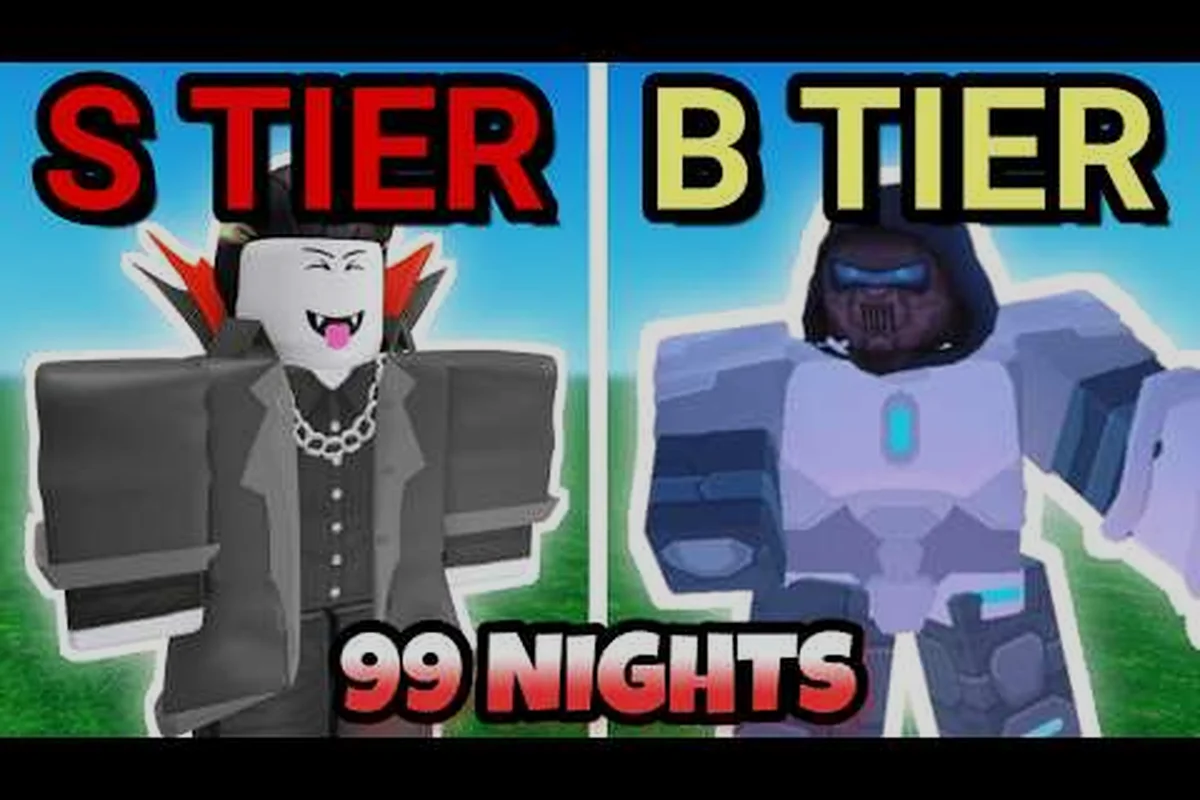
The complete 99 Nights in the Forest all classes breakdown organizes every role into four tiers based on community testing and overall performance across solo and group scenarios. PC Gamer's tier list places Big Game Hunter, Cyborg, Necromancer, and Vampire in the S-Tier, while A-Tier includes Assassin, Beastmaster, Brawler, Chef, Explorer, Fire Bandit, Gambler, and Lumberjack. The B-Tier and C-Tier contain the remaining roles, which still serve niche purposes but generally underperform compared to higher-ranked options.
S-Tier and A-Tier Class Breakdown
The S-Tier classes dominate because their passives scale exceptionally well into the later nights, when enemy density and threat variety reach their peak. Necromancer stands out for its ability to raise defeated enemies as temporary allies, effectively turning the forest's own creatures into a defensive screen. Vampire offers sustain through life-steal mechanics, reducing your reliance on food and healing items during extended survival sessions.
| Class | Tier | Primary Strength | Best For |
|---|---|---|---|
| Big Game Hunter | S | High single-target damage | Boss encounters and elite threats |
| Cyborg | S | Energy-based utility | Tech-focused survival strategies |
| Necromancer | S | Minion summoning | Crowd control and defense |
| Vampire | S | Life-steal sustain | Long solo runs |
| Assassin | A | Burst damage and stealth | Hit-and-run tactics |
| Beastmaster | A | Companion synergy | Group support and scouting |
| Lumberjack | A | Fast wood gathering | Base building and crafting |
These top-tier picks justify their higher Diamond costs through meaningful power spikes that remain relevant across all 99 nights. If you want to understand how these classes compare in a dedicated ranking context, the 99 Nights in the Forest tier list provides a deeper performance analysis with matchup-specific recommendations.
B-Tier and C-Tier Class Overview
The lower tiers should not be dismissed entirely, because several B-Tier classes excel at specific tasks that higher-tier roles neglect. Blacksmith offers crafting discounts that save significant resources over a full run, while Farmer and Cook generate food surpluses that keep a group fed without constant scavenging. The C-Tier classes like Base Defender and Fisherman serve as budget entry points for new players who want to learn the survival loop before committing serious Diamonds.
| Lower Tier Class | Niche Strength | When to Pick |
|---|---|---|
| Blacksmith | Crafting cost reduction | Group runs with heavy building |
| Farmer | Passive food generation | Long-term survival sessions |
| Cook | Food efficiency bonuses | Teams with multiple players |
| Fisherman | Water-based resource gathering | Maps with abundant water sources |
| Base Defender | Camp fortification bonuses | Defensive playstyles |
| Medic | Healing efficiency | Support-focused group roles |
The 99 Nights in the Forest best classes debate often ignores these situational picks, but experienced players know that a well-timed Blacksmith or Medic can outperform a poorly played S-Tier role in coordinated group scenarios. Your class choice should reflect your actual playstyle and team composition rather than blindly following tier rankings.
How to Unlock Classes and Manage Diamond Costs
Learning how to unlock classes in 99 Nights in the Forest requires understanding the Diamond economy and the most efficient ways to accumulate premium currency without spending Robux. The VG247 class guide confirms that Diamonds come from three main sources: redeeming codes in the shop menu, completing specific in-game challenges, and direct Robux purchases. Community testing shows that active code redemption alone can provide enough Diamonds for one or two mid-tier class unlocks within your first few play sessions.
Free Diamond Farming Methods
The most reliable free Diamond sources involve completing daily challenges and milestone objectives that reset on a regular schedule. Players report that focusing on survival milestones, such as reaching specific night thresholds or defeating certain enemy types, yields consistent Diamond rewards without requiring premium purchases. The class cost and Diamond guide breaks down the exact farming routes and daily shop mechanics that maximize your currency income.
| Diamond Source | Approximate Yield | Reset Frequency | Difficulty |
|---|---|---|---|
| Active codes | 50–200 per code | Monthly or event-based | Easy |
| Daily challenges | 25–75 per day | Daily | Moderate |
| Survival milestones | 100–500 per milestone | One-time | Varies |
| Special events | 200–1,000 per event | Seasonal | Hard |
Because the 99 Nights in the Forest class unlock costs range from roughly 150 Diamonds for C-Tier roles up to 1,200 for S-Tier picks, a patient free-to-play approach can unlock most classes within a few weeks of consistent play. Prioritize the classes that match your survival strategy first, then expand your roster as your Diamond reserves grow.
Avoiding Common Unlock Mistakes
The biggest mistake new players make is spending Diamonds on a class that looks interesting but does not fit their actual playstyle. Before committing to any unlock, test the survival loop with a budget class to understand whether you prefer aggressive combat, resource gathering, or support roles. Community reports consistently show that players who rush into S-Tier purchases without understanding the underlying mechanics often regret the decision within their first few runs.
Another common error involves ignoring the starting items that come with each class. A class with a powerful passive but weak starting equipment may struggle during the early nights, forcing you to scavenge for basic tools while threats escalate. The 99 Nights in the Forest class guide recommends reviewing the full loadout before spending Diamonds, because a balanced starting kit often matters more than a flashy passive ability during the critical first week of survival.
Solo vs Squad: Choosing a Class for Both Modes
The 99 Nights in the Forest best classes vary significantly depending on whether you play alone or with a coordinated group. Solo players benefit most from classes with self-sustain and high damage output, because they cannot rely on teammates to cover their weaknesses. Group players, by contrast, can specialize into support or utility roles that multiply the team's overall effectiveness even if individual damage numbers look lower.
Solo Play Recommendations
For solo runs, Vampire and Big Game Hunter consistently rank as top choices because they address the two biggest solo challenges: staying alive and eliminating threats efficiently. Vampire provides life-steal that reduces your dependence on food and healing items, while Big Game Hunter delivers the burst damage needed to take down elite enemies before they overwhelm you. The best group class tier list offers additional context on how solo and group rankings diverge across different scenarios.
| Solo Class | Key Advantage | Survival Impact |
|---|---|---|
| Vampire | Life-steal sustain | Reduces resource consumption |
| Big Game Hunter | High burst damage | Eliminates threats quickly |
| Necromancer | Minion distraction | Creates defensive buffer |
| Assassin | Stealth and mobility | Avoids unnecessary fights |
Solo players should also consider the Lumberjack for its fast wood gathering, because base fortifications become your primary defense when no teammates are around to watch your back. The ability to quickly construct walls and traps can mean the difference between surviving night 40 and falling to a late-game ambush.
Group Play Synergies
Group play rewards specialization, and the 99 Nights in the Forest class system encourages teams to diversify their roles for maximum coverage. A balanced group typically includes one damage dealer, one resource gatherer, and one support class, with the fourth slot flexing based on the specific threats expected in upcoming nights. Beastmaster provides scouting and companion support that benefits the entire team, while Chef and Cook keep everyone fed without constant scavenging runs.
| Group Role | Recommended Classes | Team Contribution |
|---|---|---|
| Damage Dealer | Big Game Hunter, Assassin | Eliminates threats |
| Resource Gatherer | Lumberjack, Farmer | Supplies building materials |
| Support | Medic, Chef, Beastmaster | Healing and utility |
| Flex | Cyborg, Blacksmith | Adapts to team needs |
Coordinated teams that spread their class choices across these roles consistently survive longer than groups that stack multiple damage dealers with no support backbone. The 99 Nights in the Forest class system rewards strategic diversity, and understanding how your pick complements your teammates' choices elevates the entire group's survival ceiling.
Class Synergies with Items and Crafting
Your class choice directly influences which items and crafting recipes provide the most value, creating a layered decision-making process that extends beyond the initial unlock. The 99 Nights in the Forest items list details the full equipment catalog, but the key insight is that certain classes amplify specific item categories through their passive abilities. A Blacksmith, for example, gets more value from crafting stations and metal-based equipment, while a Lumberjack benefits disproportionately from axe upgrades and wood-based construction projects.
Matching Classes to Crafting Priorities
Understanding these synergies allows you to plan your resource allocation more efficiently from the very first night. If you pick Big Game Hunter, prioritize weapon upgrades and damage-boosting consumables, because your passive already amplifies combat effectiveness. If you choose Farmer or Cook, invest in food production infrastructure early, since your class abilities multiply the output of every farming plot and cooking station you build.
| Class | Crafting Priority | Resource Focus |
|---|---|---|
| Big Game Hunter | Weapon upgrades | Combat materials |
| Lumberjack | Axe and structure upgrades | Wood and building supplies |
| Blacksmith | Crafting station efficiency | Metal and tool components |
| Cook | Food production | Ingredients and cooking stations |
| Medic | Healing item crafting | Medical supplies |
This crafting alignment means your class choice ripples through every subsequent decision, from which resources you gather to which structures you build first. The 99 Nights in the Forest class guide emphasizes that new players often underestimate these synergies, leading to inefficient resource allocation that compounds over the full 99-night duration.
Frequently Asked Questions
How many classes are in 99 Nights in the Forest?
The game features over two dozen classes spread across four tiers, with community sources like PC Gamer listing approximately 24 distinct roles. The exact count may shift with updates, but the core roster includes combat, gathering, support, and utility classes that cover every survival playstyle.
What is the cheapest class to unlock?
C-Tier classes like Base Defender and Fisherman cost around 150 Diamonds, making them the most affordable entry points. These budget options let new players learn the survival loop without committing significant premium currency, and their permanent unlocks remain useful for specific scenarios.
Can I earn Diamonds without spending Robux?
Yes, you can earn Diamonds through active code redemption, daily challenges, and survival milestones without spending real money. Community reports confirm that consistent free-to-play grinding can unlock most classes within a few weeks, though S-Tier picks require more patience or strategic saving.
Do classes reset between runs?
No, class unlocks are permanent once purchased with Diamonds. You can switch between unlocked classes at the camp menu between runs, allowing you to adapt your role based on team composition or the specific challenges you expect in upcoming nights.
Which class is best for a complete beginner?
Lumberjack is widely recommended for beginners because its fast wood gathering provides immediate value and teaches core survival mechanics without complex combat demands. The passive resource bonus helps new players build defenses quickly while they learn enemy patterns and threat management.