
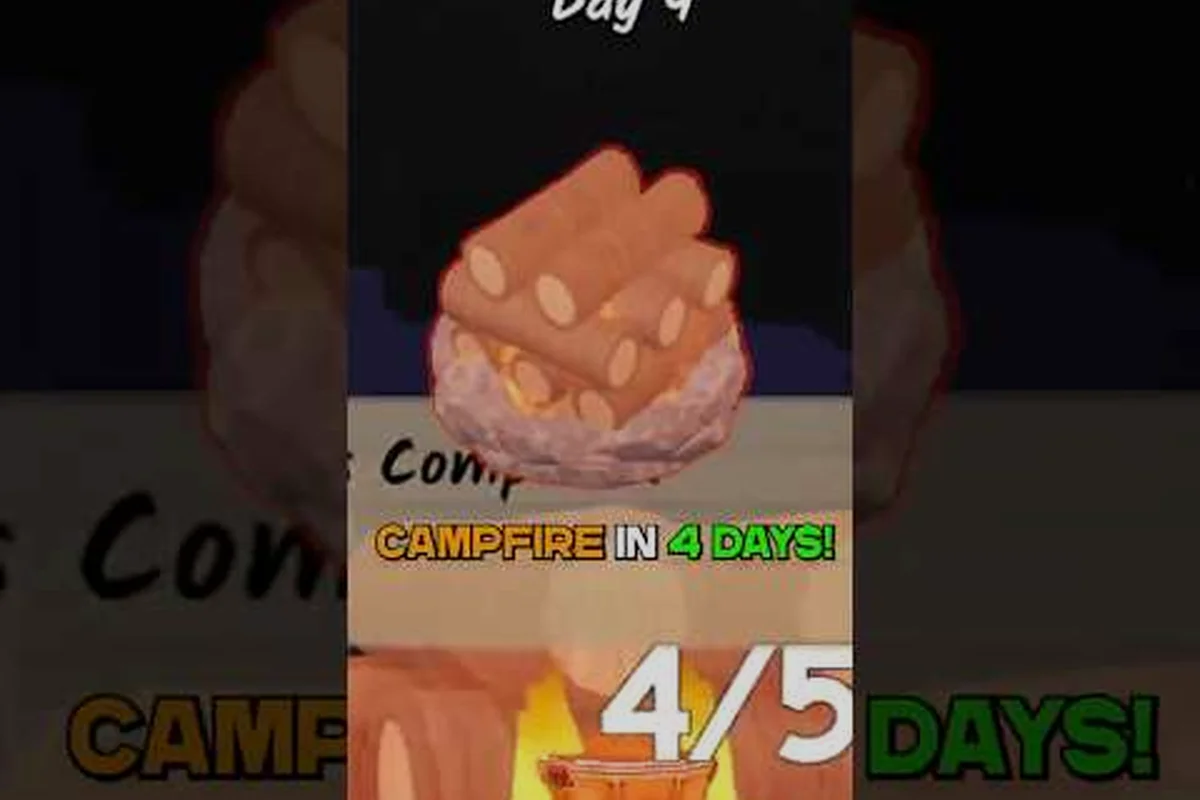
A campfire is the single most important structure in 99 Nights in the Forest, because it anchors your entire survival loop against the horrors that emerge after sunset. Without a reliable flame, your base collapses, your sanity drains, and the forest reclaims everything you have built. This 99 Nights in the Forest campfire guide breaks down exactly how to keep that fire burning through all 99 nights, where to place it for maximum safety, and what to do when rain, wind, or monsters try to snuff it out.
How the Campfire Powers Your Night Loop
The campfire is not just a light source. It is a survival anchor that determines whether your base remains a safe zone or becomes another abandoned ruin in the woods. According to the official 99 Nights in the Forest page on Roblox, the game has drawn over 29 billion visits since its March 2025 launch, which means millions of players have already struggled with the same flame-management problems you are facing right now.
How the Campfire Actually Works
Every campfire in 99 Nights in the Forest operates on a fuel consumption timer that accelerates based on three variables: weather conditions, proximity to hostile entities, and the number of players standing near the flame. Community testing consistently shows that a basic campfire with standard wood logs burns for roughly 90 to 120 seconds before requiring additional fuel, although this window shrinks dramatically during storm events or when a Deer or other forest horror approaches your perimeter.
The core loop looks like this: ignite the campfire with dry twigs to establish a flame, then feed it wood logs to maintain a sustained burn before the fuel timer expires, and finally upgrade to hardwood planks or coal chunks when you need extended coverage for base building or scouting runs. Each transition forces a decision about how much fuel you can afford to commit, since the fuel consumption timer accelerates when rain begins, when a Deer closes in on your perimeter, or when multiple players huddle near the flame for warmth. The practical rhythm that emerges is a roughly 90-second attention cycle: check the fire, add one log, verify no hostile entity has entered the light radius, then return to whatever task you were doing before the next burn window ends.
| Campfire Stage | Fuel Type | Approximate Burn Time | Risk Level |
|---|---|---|---|
| Ignition | Dry Twigs | 10 to 15 seconds | Low |
| Sustained Burn | Wood Logs | 90 to 120 seconds | Medium |
| Reinforced Burn | Hardwood Planks | 180 to 240 seconds | Low |
| Emergency Burn | Coal Chunks | 300+ seconds | Very Low |
| Rain Exposure | Any Fuel | 50% duration penalty | High |
The fuel consumption timer is the mechanic most new players misunderstand. You cannot simply light a fire and walk away, because the game does not pause the burn cycle when you leave the immediate area. If you plan to gather resources or scout for missing children, you need to either assign a teammate to tend the flame or stockpile enough hardwood planks to cover your absence.
Why Your Fire Keeps Dying
Players report three primary reasons their campfires extinguish before dawn. The first is fuel starvation, which happens when you rely on low-tier twigs that burn out in seconds. The second is rain exposure, which applies a hidden 50% burn duration penalty to every fuel type unless you build a canopy roof over the fire pit. The third is entity interference, because certain forest horrors actively target your flame as a way to break your morale and force you into the dark.
A fourth, less obvious cause is placement error. If you build your campfire too close to a water source, ambient moisture reduces ignition success. If you build it on uneven terrain, the game may register the flame as unstable and trigger random extinguish events even with full fuel.
Campfire Placement and Base Design Fundamentals
Where you place your campfire determines how efficiently you can defend it, fuel it, and retreat to it when the forest turns hostile. The 99 Nights in the Forest base design meta has shifted several times since launch, but the core principles remain consistent across every patch. determines how efficiently you can defend it, fuel it, and retreat to it when the forest turns hostile. The 99 Nights in the Forest base design meta has shifted several times since launch, but the core principles remain consistent across every patch, so if you're still getting your footing on resource loops and early shelter priorities, the 99 Nights In The Forest Beginner Guide walks through the foundational setup that most late-game layouts build on.
Choosing the Right Location
The ideal campfire location balances three factors: resource proximity, defensive sightlines, and terrain stability. You want to be close enough to trees and stone nodes that fuel runs take less than 30 seconds, but far enough from dense forest that enemies cannot ambush you from multiple angles. Flat ground is non-negotiable, because the game's stability check penalizes fires built on slopes or near cliff edges.
| Location Type | Fuel Access | Defensive Rating | Stability | Overall Viability |
|---|---|---|---|---|
| Open Clearing | Medium | High | Excellent | Strong |
| Cave Entrance | Low | Very High | Good | Situational |
| Riverbank | High | Low | Poor | Weak |
| Dense Forest | Very High | Very Low | Fair | Risky |
| Elevated Ridge | Low | Excellent | Poor | Situational |
The open clearing remains the most reliable choice for solo players, because it gives you a full 360-degree view of approaching threats. The cave entrance works well for teams that can split duties, since one player can guard the narrow approach while another tends the flame. The riverbank looks appealing because of water access, but the ambient moisture penalty makes it one of the worst locations in the game for fire maintenance.
Building a Defensible Fire Pit
A bare campfire is a liability. The moment you have enough resources, you should construct a stone ring around the flame, which reduces the chance of random extinguish events by a significant margin. From there, add a canopy roof to block rain, and consider a windbreak wall on the side that faces the prevailing storm direction.
The full defensive fire pit setup includes the stone ring, canopy roof, and windbreak wall as the core trio, but the real difference between a camp that survives night 99 and one that wipes at night 47 comes down to how these pieces interact. A stone ring alone blocks roughly 40% of random extinguish events, yet wind gusts can still punch through if your windbreak wall is placed more than two foundation tiles away from the flame — the game checks wind direction against wall proximity every 30 seconds, so a wall built too far back provides zero protection. Likewise, a canopy roof without a stone ring leaves the fire exposed to ground-level splash from rain pooling, which applies a stacking wetness debuff that eventually forces a relight. The full setup is not just about stacking individual bonuses; it is about closing the specific failure paths that each weather event triggers, which is why the build order matters more than the total resource count.
-
Stone Ring: Reduces random extinguish chance and contains the flame radius
-
Canopy Roof: Blocks rain penalty and keeps the fire dry during storms
-
Windbreak Wall: Prevents wind gusts from snuffing the flame
-
Fuel Storage Box: Keeps logs and planks within arm's reach
-
Perimeter Torches: Extends your safe zone without requiring additional campfires
Each of these structures costs resources, so prioritize the stone ring first, then the canopy roof, then the windbreak wall. The fuel storage box is a quality-of-life upgrade that becomes essential once you start stockpiling coal chunks for emergency burns.
Fuel Management and Burn Optimization
Fuel is the lifeblood of your campfire, and knowing which materials to burn, when to burn them, and how to stretch each unit is the difference between a comfortable night and a desperate scramble in the dark. The 99 Nights in the Forest how to keep campfire lit question has a simple answer: stockpile the right fuel and never let your burn timer hit zero.
Fuel Types Ranked by Efficiency
Not all fuel is created equal. The game offers several burnable materials, but their burn time per resource cost varies dramatically. Community data suggests that hardwood planks offer the best balance of availability and burn duration, while coal chunks are the premium option for long nights or boss encounters.
| Fuel Type | Burn Time | Resource Cost | Efficiency Rating | Best Use Case |
|---|---|---|---|---|
| Dry Twigs | 10 to 15 sec | Very Low | Poor | Emergency ignition only |
| Wood Logs | 90 to 120 sec | Low | Good | Standard night fuel |
| Hardwood Planks | 180 to 240 sec | Medium | Excellent | Extended resource runs |
| Coal Chunks | 300+ sec | High | Outstanding | Boss nights and storms |
| Scrap Wood | 45 to 60 sec | Very Low | Fair | Early game filler |
The efficiency rating matters more than raw burn time, because you need to consider how much time you spend gathering each fuel type. Wood logs are easy to collect but burn quickly, which means you spend more time chopping and less time doing other tasks. Hardwood planks require a crafting step but pay off with nearly double the burn duration.
The Refuel Window Strategy
The most common mistake players make is waiting until the fire is nearly out before adding fuel. This creates a panic window where you are vulnerable to extinguish events and enemy pressure. Instead, adopt a refuel window strategy that keeps your flame above 50% capacity at all times.
Instead of reacting to a dying flame, you proactively maintain a fuel buffer that absorbs unexpected events without letting the fire dip into dangerous territory. For example, if a cannibal patrol wanders near your base and forces you to stop gathering wood for two minutes, a fire sitting at 70% capacity still has roughly a full in-game hour of burn time left — plenty of room to reposition, fight, or wait out the threat. The same buffer protects you during rain storms, which accelerate burn rates by up to 3x depending on storm intensity, and during extinguish events that can instantly knock 20–30% off your flame if triggered while you are away from the pit. By treating 50% as your floor rather than your warning line, you convert what would otherwise be a scramble for fuel into a calm, repeatable loop: check, top off, return to your task.
-
Check your campfire burn timer every 60 to 90 seconds
-
Add fuel when the timer drops below 50%, not when it hits 10%
-
Keep at least 3 wood logs or 2 hardwood planks in your inventory at all times
-
During storms, double your refuel frequency
-
Before leaving base, fill the fire to 100% and place backup fuel in the storage box
This approach eliminates the panic window entirely, because you are always operating with a buffer. If an enemy attacks or a storm hits, you have time to react without watching your flame die in real time. The refuel window strategy is especially critical during the later nights of the 99 nights in the forest run, when cannibal patrols become more frequent and rain storms can chain together for multiple in-game hours. A fire maintained at 70% capacity gives you roughly a full in-game hour of burn time even under 3x storm acceleration, which means you can retreat into your base interior, reposition to a defensive choke point, or wait out a mutant encounter without the flame ever dipping below the 50% floor. This buffer is what separates a calm, repeatable loop from a desperate scramble for wood logs in the dark.
Surviving Storms, Rain, and Entity Attacks
The forest does not want your fire to survive. Rain, wind, and hostile entities all conspire to extinguish your flame, and each threat requires a different countermeasure. Understanding these threats is essential for anyone who wants to master the 99 Nights in the Forest campfire extinguish mechanics and keep their base intact through all 99 nights.
Weather Threats and Countermeasures
Rain is the most persistent threat to your campfire, because it applies a 50% burn duration penalty to every fuel type. This means a hardwood plank that normally burns for 200 seconds will only last 100 seconds in the rain. The only reliable countermeasure is a canopy roof, which completely negates the rain penalty as long as it remains intact.
Wind is less common but more dangerous, because a strong gust can instantly extinguish an unprotected flame regardless of fuel level. The windbreak wall reduces this risk, but community testing suggests it does not eliminate it entirely. During high-wind events, you should stay near your campfire and be ready to reignite it immediately.
| Threat Type | Effect on Campfire | Countermeasure | Countermeasure Cost |
|---|---|---|---|
| Light Rain | 50% burn duration penalty | Canopy Roof | Medium |
| Heavy Storm | 75% burn duration penalty | Canopy Roof + Windbreak | High |
| Wind Gust | Instant extinguish chance | Windbreak Wall | Medium |
| Entity Attack | Direct flame damage | Perimeter Torches + Guard | Variable |
| Ambient Moisture | Reduced ignition success | Relocate fire pit | Low |
The ambient moisture penalty is the sneakiest threat, because it does not show up as a visible debuff. If you build your campfire near a river or in a low-lying area, you may notice that ignition attempts fail more often and the flame sputters even with full fuel. The fix is simple: relocate your fire pit to higher, drier ground.
Defending Against Forest Horrors
Certain enemies in 99 Nights in the Forest specifically target your campfire as a way to break your defenses. The Deer, which PC Gamer's 99 Nights in the Forest tips guide identifies as one of the most dangerous early threats, will sometimes circle your base and attack the flame directly. When this happens, you need to prioritize flame defense over damage output.
The best defensive setup includes perimeter torches placed at the edges of your safe zone. These torches do not replace your main campfire, but they extend your light radius and create a buffer zone that slows enemy approach. If an enemy does reach your main fire, you need to fight it off while simultaneously adding fuel to keep the flame alive.
For teams, the optimal split is one player on flame duty and one or two players on combat duty. The flame duty player focuses entirely on keeping the fire lit, while the combat players engage the threat. This division of labor prevents the chaos that happens when everyone tries to do everything at once.
Advanced Campfire Strategies for Late Nights
Once you survive the first 20 or 30 nights, the game escalates. Storms become more frequent, enemies become more aggressive, and the margin for error shrinks dramatically. The strategies that worked in the early game will not carry you through the late nights without refinement.
The Multi-Fire Base Design
One of the most effective late-game strategies is the multi-fire base design, which uses two or three campfires arranged in a triangle around your core structures. This design provides redundancy, because even if one fire goes out, the others continue to hold the safe zone. It also spreads enemy attention, because forest horrors cannot attack all three flames at once.
The multi-fire design requires significantly more fuel, so it is only viable once you have established a reliable hardwood plank crafting pipeline. The 99 Nights in the Forest base building guide approach to this design is to start with a single well-defended fire, then add a second fire once your fuel stockpile exceeds 20 hardwood planks, and a third fire only if you have a team of three or more players.
| Base Design | Number of Campfires | Fuel Demand | Defensive Strength | Recommended Players |
|---|---|---|---|---|
| Single Fire | 1 | Low | Medium | 1 to 2 |
| Dual Fire | 2 | Medium | High | 2 to 3 |
| Triangle Fire | 3 | Very High | Excellent | 3+ |
| Fire Line | 2 to 4 | High | Situational | 2 to 4 |
The triangle fire design is the gold standard for late-game teams, because it creates an overlapping safe zone that is nearly impossible for enemies to breach. The fire line design works well for bases built along a natural chokepoint, but it is vulnerable to flanking attacks.
Managing the 99 Nights Endgame
The final stretch of 99 Nights in the Forest is a war of attrition. Your fuel reserves will be tested, your defensive structures will take damage, and the forest will throw everything it has at your campfire. The players who survive are the ones who treat fuel management as a constant priority rather than a periodic chore.
One advanced technique is the coal bank strategy, where you stockpile coal chunks exclusively for emergency use. These premium fuel units burn for 300+ seconds and are immune to most weather penalties, which makes them the perfect safety net for the worst nights. You should never burn coal chunks during routine nights, because they are too valuable to waste on calm weather.
Another technique is the pre-dawn refuel, where you top off your campfire just before sunrise. This ensures the flame survives the transition from night to day, which is when some players report unexpected extinguish events. The exact timing varies by server, but community data suggests the risk window is highest in the 30 seconds before dawn breaks.
Frequently Asked Questions
What is the best fuel for keeping a campfire lit in 99 Nights in the Forest?
Hardwood planks offer the best balance of burn time and resource cost, lasting 180 to 240 seconds per unit. Coal chunks are the premium option for storms and boss nights, burning 300+ seconds, but they are harder to obtain and should be reserved for emergencies.
How do I stop rain from extinguishing my campfire?
Build a canopy roof over your fire pit. This structure completely negates the rain penalty, which otherwise reduces burn duration by 50% during light rain and 75% during heavy storms. Add a windbreak wall for additional protection against wind gusts.
Why does my campfire keep going out even with fuel?
Three likely causes: fuel starvation from using low-tier twigs, rain exposure without a canopy roof, or entity interference from forest horrors that target your flame. Check your placement too, because building near water triggers an ambient moisture penalty that reduces ignition success.
Can I build multiple campfires in one base?
Yes, the multi-fire base design is a viable late-game strategy. A triangle fire arrangement with three campfires creates an overlapping safe zone that is extremely difficult for enemies to breach, though it requires a significant fuel stockpile and works best with three or more players.
What should I do if my campfire goes out during a storm?
Stay calm and reignite immediately using dry twigs for a quick ignition, then switch to hardwood planks or coal chunks for sustained burn. If the storm is still active, prioritize getting your canopy roof repaired before adding more fuel, or the rain penalty will drain your new flame just as fast.