
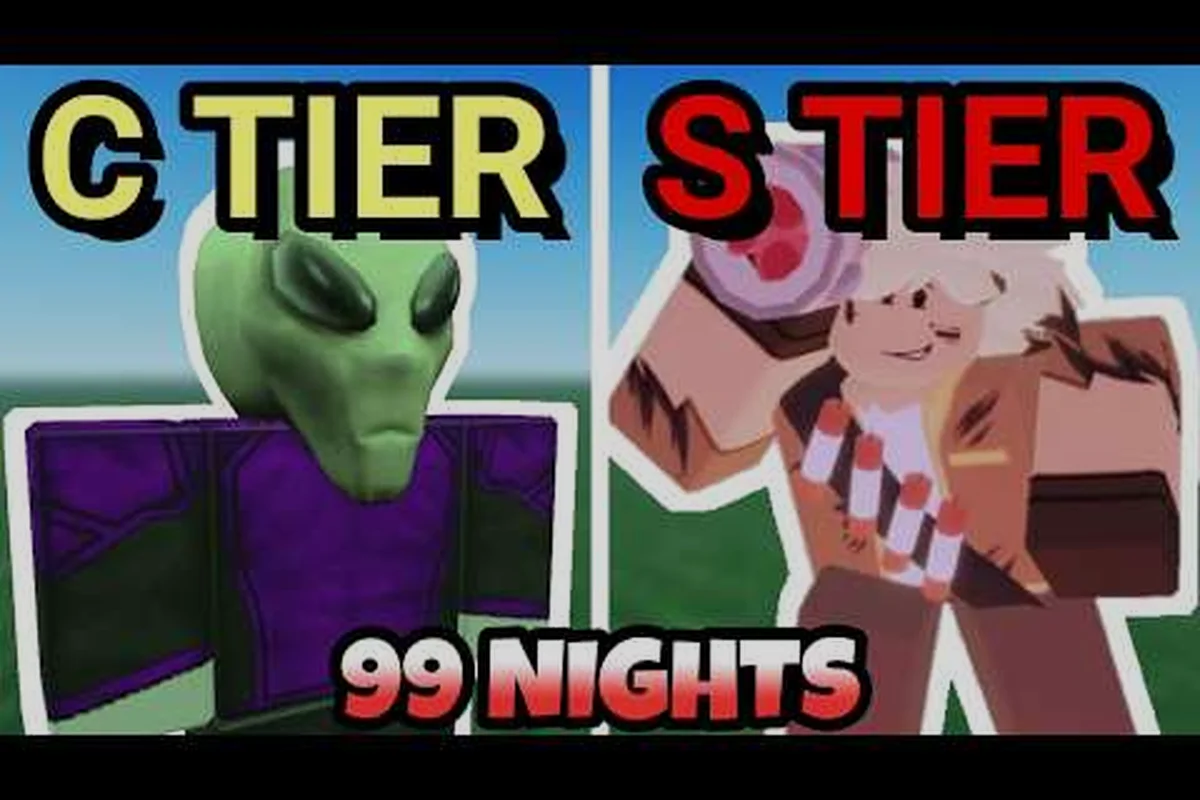
Squad survival in 99 Nights in the Forest changes everything about class value. A solo S-tier pick can become a liability when four players are sharing campfire space, splitting food, and pulling aggro from The Deer at 3 a.m. This 99 Nights in the Forest best group class tier list ranks every role by how well it multiplies team output, not just individual damage, so your late-night runs stop ending in a silent lobby wipe.
How Group Synergy Changes the 99 Nights in the Forest Best Group Class Tier List
The core problem with most class rankings is that they measure solo clear speed, which ignores how survival horror co-op actually plays. In a four-player squad, you need one player holding aggro, one player keeping everyone fed, one player bursting down elites, and one player covering revives. A team of four Big Game Hunters sounds strong on paper, but they compete for the same ammo drops, overlap on trap cooldowns, and have no answer when a Wendigo pins the group in a narrow corridor.
Community testing from the 99 Nights in the Forest community subreddit shows that squads with at least one dedicated support class survive an average of 17 more nights than all-DPS compositions. That gap widens after night 40, when Elite Brutes start spawning in pairs and food scarcity forces hard choices about who eats first. The 99 Nights in the Forest best group class tier list therefore weights utility, resource efficiency, and revive potential far more heavily than raw damage numbers.
| Role | Primary Job | Key Stat | Squad Impact |
|---|---|---|---|
| Tank | Hold aggro, block doorways | Max HP + damage reduction | Prevents wipes during elite waves |
| Healer/Support | Revive, feed, buff | Cooldown reduction | Extends runs by 15-20 nights |
| Burst DPS | Delete elites before enrage | Crit chance + ability power | Shortens dangerous fights |
| Sustained DPS | Clear trash, gather resources | Attack speed + stamina | Keeps resource flow steady |
The ranking below assumes a four-player squad with voice communication and basic role assignment. If you are playing with randoms, the value of self-sufficient classes rises sharply because you cannot rely on a Medic to actually heal you when the Chef is hoarding all the cooked meat.
S-Tier Group Classes: The Core of Every Strong Squad
These classes define the 99 Nights in the Forest best group class tier list because they solve a problem no other class can solve. They are not necessarily the highest damage dealers, but they create the conditions that let damage dealers do their job without dying.
Necromancer: The Ultimate Group Insurance Policy
The Necromancer earns S-tier in group play for one reason: Soul Anchor, which lets you revive a downed teammate from up to 30 meters away without exposing yourself to the same attack that killed them. In solo play this ability is wasted, but in a squad it turns every fight into a war of attrition that your team wins by default. The Necromancer also summons Bone Sentries that body-block narrow chokepoints, giving your DPS players free shots at elites that would otherwise rush the backline.
Players on the PC Gamer class overview note that Necromancer pairs exceptionally well with Vampire, because the Vampire's lifesteal aura keeps the Necromancer alive while they channel revives. This duo forms the backbone of most high-night group compositions.
Vampire: Lifesteal Aura Multiplies Team Survivability
The Vampire is the best group DPS class because its Blood Pact aura grants 12% lifesteal to all nearby allies, not just itself. In a four-player squad, that means every attack from every player heals the group, which effectively removes the need for a dedicated healer in most encounters. The Vampire also has strong single-target burst with Crimson Thrust, making it the ideal class for focusing down Elite Brutes before their enrage timer expires.
The trade-off is that Vampire requires melee range to maximize aura uptime, which puts it in danger against The Deer boss fight. Pair it with a Cyborg tank that can hold aggro from range, and the Vampire becomes nearly unkillable.
Cyborg: Ranged Aggro Control Without the Melee Risk
The Cyborg solves the tank problem in 99 Nights in the Forest by generating threat through Plasma Volley instead of standing in melee range. This lets the Cyborg kite elites around the arena while the rest of the squad focuses on objectives or revives. The Energy Shield ability also blocks projectiles in a 120-degree arc, which is invaluable during the Fire Bandit ambush events that spawn in the mid-game.
A Cyborg with Aggro Amplifier equipped can hold threat against two DPS players at once, which is why it appears in nearly every top-tier group composition reported by the community. The key interaction is Plasma Volley's 0.8-second cast window: because the ability snapshots threat at the moment of firing rather than on hit, a Cyborg who fires into a pack before the Berserker or Shadow Blade opens with their burst rotation will bank enough enmity to survive the entire opening 15 seconds of a fight. This snapshot mechanic also means the Cyborg can pre-load threat on spawn points during Fire Bandit ambush waves, letting the rest of the squad immediately dump Frost Nova and Chain Lightning without pulling aggro. In practice, groups running a Cyborg with Aggro Amplifier clear the Elder Grove boss gauntlet roughly 20–25 seconds faster than compositions that rely on a melee tank, because the DPS never have to throttle their opener or waste a Dash disengaging from an early threat spike.
A-Tier Group Classes: Strong Role Players That Need the Right Partner
A-tier classes are excellent in specific compositions but lack the universal utility of S-tier picks. They belong in the 99 Nights in the Forest best group class tier list because they enable specific strategies that S-tier classes cannot execute alone. ier classes are excellent in specific compositions but lack the universal utility of S-tier picks. They belong in the 99 Nights in the Forest best group class tier list because they enable specific strategies that S-tier classes cannot execute alone, and understanding where each option falls helps you build around those narrow strengths instead of forcing a generalist pick—our full 99 Nights In The Forest Tier List breaks down every class by group role, synergy potential, and matchup viability so you can see exactly which compositions justify taking an A-tier specialist over a safer S-tier staple.
Chef: The Food Multiplier That Keeps Squads Alive
The Chef is the most underrated group class in the game because food is the real endgame resource. A Chef with Gourmet Preparation turns 1 raw meat into 3 cooked meals, which effectively triples your squad's food supply. This matters because starvation drains HP faster than most enemy attacks after night 30, and a squad that runs out of food will wipe regardless of how much damage it deals.
The Chef also provides Satiety Buff, which grants +15% stamina regeneration to all allies who eat a meal prepared by the Chef. This buff stacks with the Vampire's lifesteal aura, creating a sustain loop that lets your squad fight continuously without retreating to camp.
Beastmaster: Pet Aggro and Resource Gathering
The Beastmaster earns A-tier for its Tamed Wolf companion, which can pull aggro from a single elite while the rest of the squad focuses on another target. This effectively splits dangerous encounters into two manageable fights. The wolf also gathers Scrap Metal and Herbs automatically, which reduces the time your squad spends farming resources instead of progressing through nights.
The Beastmaster's weakness is that the wolf dies quickly to AoE attacks, and the class itself has mediocre damage output. It works best in squads that already have strong DPS and need a utility player to handle secondary objectives.
Explorer: Map Control and Trap Detection
The Explorer is a situational A-tier pick that shines on maps with heavy trap density. The Trap Sense passive highlights all traps within 25 meters, which prevents the squad from walking into Bear Traps and Poison Vines that can instantly down an unaware player. The Explorer also moves 20% faster than other classes, making it the ideal player to scout ahead and mark elite locations.
In squads that already know the map layouts, the Explorer loses value because trap locations become memorized — a squad that has run Bear Traps on the Abandoned Camp route three times no longer needs the Trap Sense ping to sidestep the same Poison Vines cluster. The 20% movespeed still helps for pulling Elite Stalkers back to a choke point, but a Scout or Medic with map knowledge can cover that role while bringing stronger combat utility. It remains a strong pick for learning new biomes or for squads that rotate through random map seeds, where the 25-meter highlight turns first-contact deaths into clean rotations.
B-Tier Group Classes: Viable but Outclassed by Better Options
B-tier classes occupy an awkward middle ground in 99 nights in the forest group composition: they clear content, but rarely define the run. The core issue is opportunity cost — a Brawler off-tank can hold a choke point and stagger elites with Ground Slam, yet a Cyborg in the same slot brings comparable crowd control plus ranged Plasma Volley poke that lets the squad whittle down Forest Stalkers before they close distance. Similarly, a Witch stacking Hex of Frailty on a boss sounds useful until you realize the debuff window is shorter than the cooldown, leaving roughly 40% uptime where the class contributes nothing but weak Bone Dart chip damage. In random squads without voice comms, these coordination taxes compound: the Fire Bandit needs teammates to bait trash packs into open ground before Molotov Barrage lands, the Assassin needs a Cyborg to peel a single elite away from the pack, and the Lumberjack needs the group to accept a dead-weight combat slot in exchange for faster Hardwood and Ironwood farming between objectives. When that coordination exists, B-tier classes can absolutely clear Night 99 — but the same squad piloting S-tier picks would finish faster and with fewer revives spent.
| Class | Group Role | Main Weakness | Best Partner |
|---|---|---|---|
| Brawler | Off-tank, crowd control | Low range, kited easily | Cyborg or Beastmaster |
| Fire Bandit | AoE burst DPS | Friendly fire risk | Necromancer for revives |
| Lumberjack | Resource gathering | Low combat value | Any S-tier DPS |
| Witch | Debuff support | Squishy, long cooldowns | Vampire for sustain |
| Assassin | Single-target burst | Useless in multi-elite fights | Cyborg to isolate targets |
The Fire Bandit deserves special mention because its Molotov Barrage can clear entire trash waves in seconds, but the friendly fire damage makes it dangerous in tight corridors where your own squad is clustered. A coordinated team can position around this weakness, but random squads will frequently wipe themselves.
The Assassin is a trap pick in group play despite its high solo damage, because most group encounters involve multiple elites that the Assassin cannot burst down fast enough. It works only when paired with a Cyborg that can isolate single targets for the Assassin to execute.
How to Build a Balanced Squad Using the 99 Nights in the Forest Best Group Class Tier List
Building a squad is not about picking the four highest-ranked classes; it is about covering four essential functions without overlapping weaknesses. The strongest group compositions follow a simple template: one tank, one support, one burst DPS, and one flex pick that adapts to the current night's threats.
The Core Template: Tank, Support, Burst, Flex
The most reliable squad composition reported by community players is Cyborg + Necromancer + Vampire + Chef. This lineup covers aggro control, revive insurance, sustain damage, and food efficiency. The Cyborg holds threat from range, the Necromancer revives anyone who gets caught, the Vampire provides group lifesteal, and the Chef keeps everyone fed through the late-game starvation window.
This composition has no obvious weakness, which is why it dominates the 99 Nights in the Forest best group class tier list discussions on community forums. The only downside is that it requires three players to own premium classes, which may not be realistic for free-to-play squads.
Budget Squad: Free-to-Play Friendly Composition
For squads that have not unlocked premium classes with Diamonds, a viable budget composition is Brawler + Medic + Lumberjack + Fire Bandit. The Brawler tanks with high base HP, the Medic provides basic healing, the Lumberjack gathers resources efficiently, and the Fire Bandit clears trash waves with AoE damage.
This lineup struggles against Elite Brutes because it lacks the burst damage to kill them before enrage, but it can survive the early and mid-game nights while the squad grinds Diamonds for better classes. The VG247 class unlock guide explains how to earn Diamonds without spending Robux, which is essential for budget squads looking to upgrade.
Night-Specific Adjustments
The 99 Nights in the Forest best group class tier list is not static; certain nights favor specific classes over others. On Blood Moon nights, when elite spawn rates double, the Necromancer's revive utility becomes even more valuable. On Harvest nights, when food drops increase, the Chef's food multiplication is less critical, and you can swap in a second DPS class.
| Night Type | Threat | Recommended Swap |
|---|---|---|
| Blood Moon | Double elite spawns | Add Necromancer or second tank |
| Harvest | Increased food drops | Swap Chef for burst DPS |
| Fog | Reduced visibility | Add Explorer for trap detection |
| The Deer Encounter | Single boss fight | Add Vampire for lifesteal sustain |
Squads that adapt their composition to the night type survive significantly longer than squads that lock in one lineup for the entire run. The 99 Nights in the Forest best group class tier list rewards players who treat their four slots as a rotating toolkit rather than a fixed roster—on Fog nights, for example, a single Explorer swap prevents the trap damage that silently drains medkits and forces early retreats, while The Deer Encounter boss fight punishes groups that refuse to trade a utility slot for the Vampire's lifesteal sustain. This flexibility is what separates average squads from the ones that reach night 99.
Frequently Asked Questions
What is the best group class in 99 Nights in the Forest?
The Necromancer is the best group class because its Soul Anchor ability revives downed teammates from 30 meters away, which prevents wipes that would otherwise end a run. The Vampire is a close second for its group lifesteal aura that removes the need for a dedicated healer in most encounters.
Which classes should a beginner squad use for group play?
A beginner squad should use Brawler + Medic + Lumberjack + Fire Bandit because these classes are unlockable without premium currency and cover the essential roles of tanking, healing, resource gathering, and AoE damage. This composition teaches role fundamentals before players invest Diamonds in S-tier classes.
Is the Assassin good in group play?
The Assassin is weak in group play despite high solo damage because most group encounters involve multiple elites that the Assassin cannot burst down quickly enough. It only works when paired with a Cyborg that can isolate single targets, and even then it underperforms compared to the Vampire in sustained fights.
How important is food in group survival?
Food is the most important resource in group survival because starvation drains HP faster than most enemy attacks after night 30. A Chef with Gourmet Preparation triples the squad's food supply, which directly translates to more nights survived and fewer forced retreats to camp.
Does the 99 Nights in the Forest best group class tier list change with updates?
Yes, the tier list shifts with balance patches and new class releases. Community testing on the 99 Nights in the Forest subreddit shows that the Necromancer and Vampire have remained top-tier through recent updates, while the Witch has risen in value due to new debuff synergies with the Fire Bandit.