
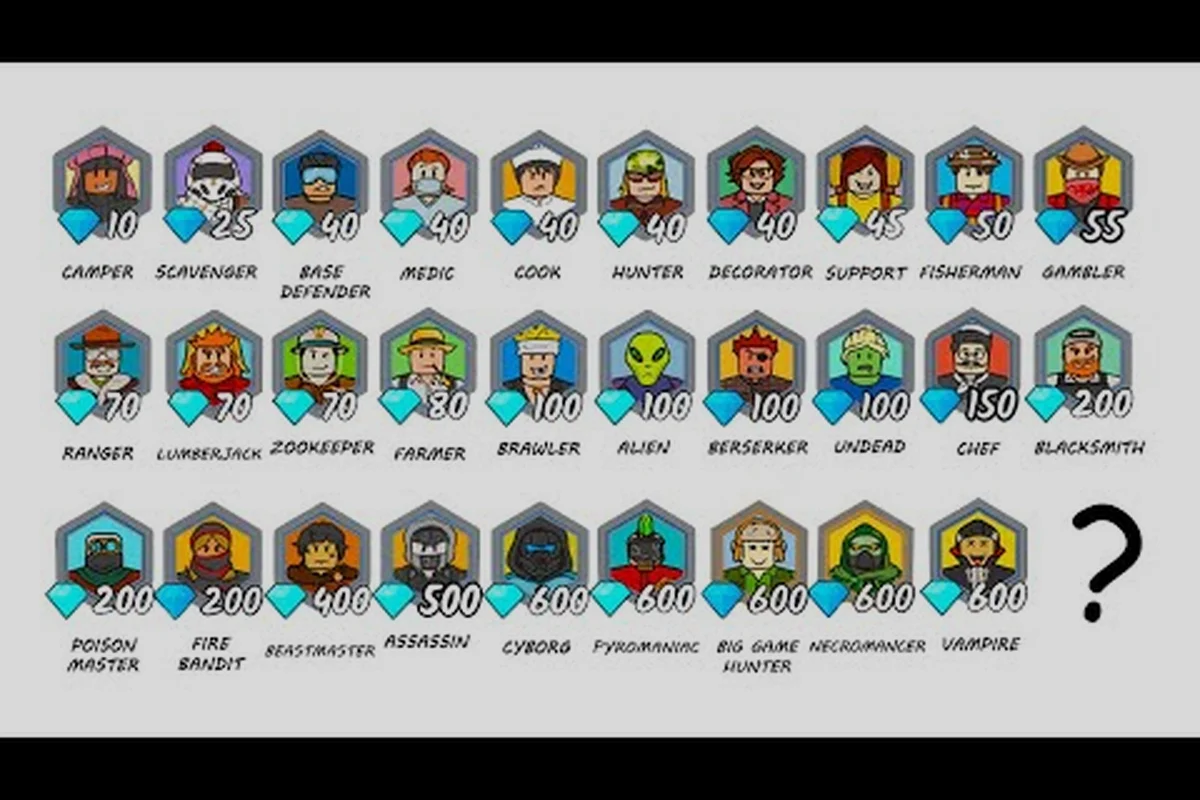
Diamonds are the premium currency that gates every class unlock in 99 Nights in the Forest, which means understanding the exact 99 Nights in the Forest class cost in Diamonds determines how fast you can expand your roster without spending Robux. Most players waste hundreds of Diamonds on impulse purchases or rerolls before they realize the daily shop follows a predictable rotation. This breakdown covers every price tier, the reroll mechanic, talent costs, and the cheapest path to a solo-ready build.
How the Diamond Class Shop Actually Works
The class shop in 99 Nights in the Forest does not show every class at once. Instead, it rotates a limited selection through a daily shop window, which means the class you want may not be available on any given day. According to the VG247 class guide, classes are unlocked with Diamonds, a premium currency that can be bought with Robux or earned through in-game challenges and code redemptions.
The shop typically displays between four and six classes per rotation, with rarity tiers determining both price and appearance frequency. Two-star classes appear far more often than three-star classes, while some high-tier roles only surface once every few days. Players who check the shop daily and redeem active codes build a Diamond reserve that lets them buy immediately when a target class appears.
| Shop Element | Behavior | Player Impact |
|---|---|---|
| Daily rotation | 4-6 classes refresh every 24 hours | Forces patience; check daily |
| Two-star slots | Common, low Diamond cost | Easy early roster expansion |
| Three-star slots | Rare, high Diamond cost | Save Diamonds in advance |
| Reroll option | Spend Diamonds to shuffle stock | High-risk, low-reward for new players |
| Code redemptions | Free Diamonds via shop menu | Primary F2P income source |
The daily shop classes system rewards consistency. Players who log in every day and redeem codes accumulate enough Diamonds to afford mid-tier classes within the first week, while sporadic players often miss their target class window and waste Diamonds on rerolls instead.
Complete Class Cost Tiers in Diamonds
The 99 Nights in the Forest class cost in Diamonds varies significantly by rarity tier. Community data and the IGN class wiki indicate that two-star classes generally cost between 40 and 80 Diamonds, while three-star classes range from 120 to 300 Diamonds depending on their power level and unique abilities.
The pricing structure follows a simple logic: classes with stronger starting items, better combat stats, or rare utility effects command higher Diamond prices. A Base Defender or Farmer sits at the bottom of the cost curve, while a Big Game Hunter or Necromancer demands a premium because those roles can carry a solo run deep into the night cycle.
| Class Tier | Typical Diamond Cost | Starting Item Quality | Best For |
|---|---|---|---|
| Two-star common | 40-60 Diamonds | Basic tools, low stats | Early roster filler |
| Two-star strong | 60-80 Diamonds | Decent weapon, one utility | Budget solo starts |
| Three-star standard | 120-180 Diamonds | Strong weapon, two abilities | Mid-game progression |
| Three-star premium | 200-300 Diamonds | Elite gear, rare passive | Late-game carry roles |
The 99 nights in the forest talents 60 diamonds benchmark matters here because talent respecs and upgrades consume the same currency. A player who spends 60 Diamonds on a talent reroll instead of saving toward a 120-Diamond class delays their roster growth by several days of code grinding.
The Class Reroll Mechanic and When to Use It
The 99 Nights in the Forest class reroll option lets you spend Diamonds to shuffle the current shop selection. This sounds useful when your target class is missing, but the math rarely favors it. A reroll typically costs between 20 and 40 Diamonds, and it does not guarantee that the class you want will appear in the new selection.
Because the shop already refreshes daily for free, paying for a reroll only makes sense in two scenarios: when you have a large Diamond surplus and need a specific class before a planned group session, or when a limited-time class is about to leave the rotation. For most players, the smarter move is to wait for the free daily refresh and bank those Diamonds toward the actual class purchase.
| Reroll Scenario | Diamond Cost | Expected Value | Recommendation |
|---|---|---|---|
| Free daily refresh | 0 Diamonds | Guaranteed new stock | Always use first |
| Single paid reroll | 20-40 Diamonds | Random new stock | Skip unless surplus |
| Chasing a specific class | 60-120 Diamonds total | Low hit probability | Wait instead |
| Limited-time class window | 20-40 Diamonds | Time-sensitive value | Worth it if close |
Players who track the 99 nights in the forest daily shop classes rotation over a week can predict when high-tier classes are likely to appear, which eliminates the need to reroll almost entirely.
Talent Costs and the 60-Diamond Benchmark
Talents are the secondary Diamond sink that catches new players off guard. The 99 Nights in the Forest class talents guide data from community testing shows that unlocking and upgrading talents on a single class can cost anywhere from 30 to 150 Diamonds depending on how many talent slots that class has and how deep you push each upgrade path.
The 99 nights in the forest talents 60 diamonds figure appears frequently because many mid-tier classes have a talent node that costs exactly 60 Diamonds to unlock. This creates a budgeting tension: do you spend 60 Diamonds on a talent that makes your current class stronger, or do you save that same amount toward a new class that might offer more value?
| Talent Investment | Diamond Cost | Return | Priority |
|---|---|---|---|
| First talent unlock | 30-40 Diamonds | Immediate stat boost | High for main class |
| Second talent node | 60 Diamonds | Major ability upgrade | Medium; compare to class cost |
| Full talent tree | 120-150 Diamonds | Max class potential | Low until roster is set |
| Talent respec | 20-30 Diamonds | Fix build mistakes | Only if build is broken |
The general rule from experienced players is to unlock one or two talents on your main class, then stop. Every additional 60-Diamond talent purchase delays your next class unlock, and roster diversity usually beats marginal talent upgrades in the early and mid game.
Cheapest Path to a Solo-Ready Build
The 99 Nights in the Forest best class for solo question has a Diamond-cost answer as much as a power-level answer. A solo player needs a class that can gather resources, defend a camp, and survive night threats without relying on teammates, which means the cheapest viable solo class is often a strong two-star option rather than an expensive three-star premium role.
According to the group class tier list, several A-tier and S-tier classes are not the most expensive options in the shop. A Lumberjack or Chef can anchor a solo run at a fraction of the Diamond cost of a Necromancer or Vampire, because their utility comes from efficient gathering and sustain rather than raw combat power.
| Solo Class Option | Approx. Diamond Cost | Solo Strength | Budget Rating |
|---|---|---|---|
| Lumberjack | 60-80 Diamonds | Fast wood gathering, camp defense | Excellent |
| Chef | 60-80 Diamonds | Food sustain, healing utility | Excellent |
| Explorer | 80-120 Diamonds | Map knowledge, navigation | Good |
| Big Game Hunter | 200-300 Diamonds | High damage, boss killing | Premium |
| Necromancer | 250-300 Diamonds | Minion army, late-game power | Premium |
The cheapest solo-ready build is usually a Lumberjack or Chef purchased for under 80 Diamonds, with one 60-Diamond talent unlocked after you confirm the class fits your playstyle. This keeps your total Diamond investment under 150 while still giving you a class that can survive deep into the night cycle.
Diamond Farming Sources and Weekly Budget Planning
Diamonds do not flow in fast enough to buy every class you want, so a weekly budget matters. The most reliable free sources are code redemptions in the shop menu, which typically drop 20 to 50 Diamonds per active code, and daily login bonuses that accumulate over consecutive days. Community reports suggest an active free-to-play player can earn between 150 and 300 Diamonds per week through these sources alone.
The official Roblox page confirms the game launched in March 2025 and receives regular updates, which means new codes and Diamond events arrive on a predictable patch cycle. Timing your class purchases around these update windows lets you stack free Diamonds from multiple sources before committing to an expensive three-star class. For a broader look at which roles deserve that saved Diamond budget, the overall class tier list breakdown ranks every option by power level.
| Diamond Source | Weekly Yield | Reliability | Notes |
|---|---|---|---|
| Active codes | 60-150 Diamonds | High | Check shop menu daily |
| Daily login streak | 35-70 Diamonds | High | Consecutive days matter |
| Event challenges | 50-100 Diamonds | Medium | Seasonal availability |
| Robux purchase | Unlimited | High | Fastest but costs money |
| Achievement rewards | 20-40 Diamonds | Low | One-time payouts |
A weekly budget of 200 Diamonds is realistic for an active free-to-play player. That means a two-star class is affordable every week, while a three-star premium class requires two to three weeks of saving. Planning around this cadence prevents the frustration of watching a target class disappear from the shop while you sit at 90 Diamonds.
Frequently Asked Questions
How much does a class cost in 99 Nights in the Forest?
Class costs vary by rarity tier. Two-star classes typically cost between 40 and 80 Diamonds, while three-star classes range from 120 to 300 Diamonds. The exact price depends on the class's starting items, combat stats, and unique abilities, with premium roles like Big Game Hunter commanding the highest prices.
Can I earn Diamonds without spending Robux?
Yes. Code redemptions in the shop menu, daily login streaks, event challenges, and achievement rewards all provide free Diamonds. An active free-to-play player can earn between 150 and 300 Diamonds per week, which is enough for a two-star class every week or a premium class every two to three weeks.
Is the class reroll worth spending Diamonds on?
Usually not. The shop already refreshes daily for free, and a paid reroll costs 20 to 40 Diamonds without guaranteeing your target class appears. The only time a reroll makes sense is when you have a large Diamond surplus or need a specific class before a limited-time window closes.
What is the best cheap class for solo play?
The Lumberjack and Chef are the strongest budget solo options, both costing between 60 and 80 Diamonds. They provide efficient resource gathering and sustain that lets you survive night cycles without teammates, making them far better value than expensive three-star combat classes for new solo players.
How many Diamonds do talents cost?
Talent costs vary by class and node depth. The first talent unlock typically costs 30 to 40 Diamonds, while deeper nodes can cost 60 Diamonds or more. A full talent tree on a single class can run 120 to 150 Diamonds, which is why most players unlock only one or two talents before saving for new classes.